
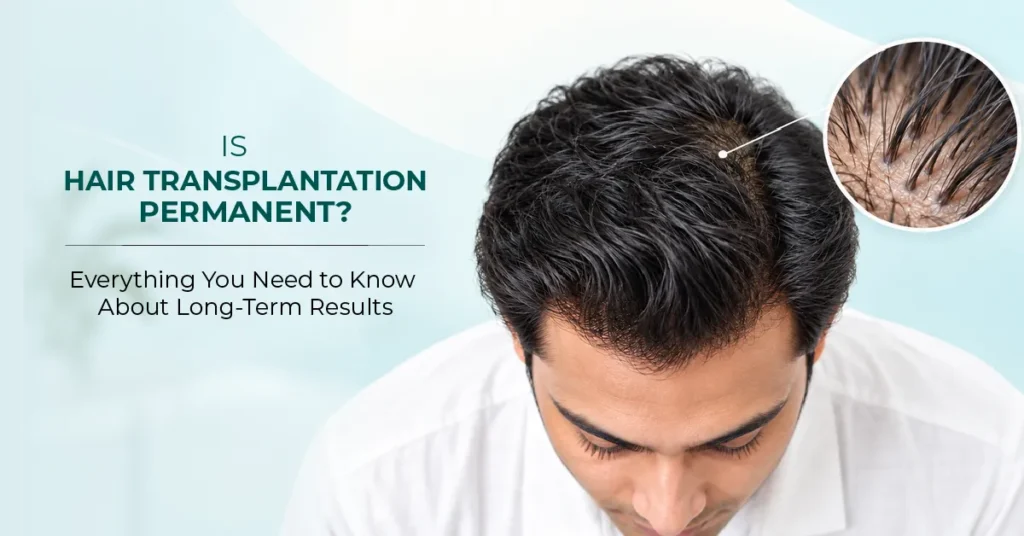
Hair loss, whether less or more, can be mentally and emotionally draining as it affects your overall appearance. This concern is forcing people to seek lasting and effective solutions in the hope of having a head full of hair. Hair transplantation has emerged as a suitable choice for people on the lookout for a safe procedure that offers natural and long-lasting results[1]. But one cannot stop questioning: is hair transplantation permanent? In this write-up, we have not only tried to explore the perfect answer to this persistent question but also help you understand the long-term results of this procedure. This blog focuses on helping you understand the factors that determine the permanency of hair transplantation and the lifespan of transplanted follicles even after 10 years or more.
Exploring the Permanency of Popular Hair Transplant Techniques
FUE: Is Hair Transplantation Permanent?
Follicular Unit Extraction procedure employs a minimally invasive technique for extracting each follicular unit separately from the donor site with the help of an advanced punching device[2]. Unlike other hair transplantation methods, it doesn’t remove a strip of skin from the scalp for hair follicle extraction. So, there are no chances of developing deep scars, as each follicle is extracted individually and implanted on the balding sites. These tiny incisions will heal quickly, indicating short recovery and leaving barely visible scars. The outcome of the FUE procedure is considered permanent, as the hair follicles from the donor area, like your head’s side or back, remain genetically resistant to the DHT hormone to prevent the development of pattern baldness in the future[3]. As soon as the transplanted follicles in the recipient area settle in the new site, they will begin their natural growth cycle and will continue to grow until one’s lifetime or for several decades.
FUT: Is Hair Transplantation Permanent?
Follicular Unit Transplantation is commonly referred to as the strip harvesting method as it requires the surgeon to remove a small strip from your scalp, mainly at the side or back, for dissecting the follicles[4]. Despite being a traditional hair transplant method, it is effectively used when there is a need to transplant a high volume of grafts within one session. As it utilizes the follicles extracted from the head’s sides and back, their genetic code remains intact. So, the follicular units remain unresponsive to the effects of DHT or dihydrotestosterone hormone responsible for shrinking and preventing hair growth in balding spots[5]. Once the transplanted grafts heal and establish circulation, it ensures hair growth remains stable in the long run.
Is Hair Transplant A Permanent Procedure?
The direct answer to your question: is hair transplantation permanent? It is based on several factors. The major factor that decides the permanency of any hair transplantation procedure, irrespective of the technique, is the genetic resistance factor of the follicles transplanted towards dihydrotestosterone. This type of testosterone hormone will cause follicles to shrink gradually and cause hair thinning and later hair loss. The follicular units extracted from the donor site at the side or back of the head will be naturally DHT-resistant, making them an excellent fit for transplant. Also, the way the hair follicles are gathered, extracted, prepared, and implanted determines their success rate and longevity of outcome. Post-op care, application of the right transplant techniques, and a skilled surgeon contribute to the permanency factor of the hair transplantation procedure.
Factors That Determine Permanency of Hair Transplant
In most cases, the hair follicles that are implanted will continue their natural growth pattern until your lifetime. But several factors also have a key role to play in determining its permanency.
- Individual Parameters: Factors like your overall health status, the follicular unit’s response to the new recipient site, and genetics will affect the long-term outcome of a hair transplant. Some of you might face hair loss continuously in other areas of the head that were not treated and would require additional transplants.
- Surgeon’s Skills and Experience: The skill levels and experience of your hair transplant surgeon will offer you a positive response to your concern – is hair transplantation permanent? A board-certified surgeon will perfectly execute a hair transplant surgery through meticulous planning and attention to ensure long-term hair growth outcome.
- Post-op Care Regime: It is important to stick to the post-op care instructions that your surgeon offers to achieve a better success rate and longevity of outcome[6]. Following the right post-op care helps in recovery and scalp healing to prevent risks and complications.
- Hair Loss Progression: Though the transplanted hair follicles will have general resistance to the DHT hormone, the hairs present in untreated scalp areas might face shedding in the future. The progression of hair loss in areas where transplant was not performed will have an impact on the overall head appearance with time.
While trying to seek answers for the question – is hair transplantation permanent? You must understand that having realistic expectations about the procedure is essential, as new hair needs time to grow. Also, a hair transplantation procedure will not combat hair fall in non-transplanted sites on the scalp [7]. To maintain the outcomes in the long run, you might have to opt for additional procedures to maintain the outcomes and density. If you have a genetic predisposition that doesn’t lead to patterned hair loss or have reached the last stage of hair loss, then there are no chances of facing hair loss in non-treated areas. So, there will be no need to avail subsequent hair transplant surgeries.
How Permanent is Hair Transplant After Several Years
The results of a hair transplantation procedure will not be visible overnight. It is a gradual process with a predictable timeline if planned and executed perfectly[8]. Here’s how the outcomes will happen over several years after a hair transplant.
Is Hair Transplantation Permanent After 5 Years?
After 5 years of hair transplantation, the transplanted follicles would have become fully mature along with full hair growth. There would be a stable hair density along the scalp, thickened hair shafts, and a natural hairline would be perfectly developed if handled by an expert surgeon. Effects of hair transplant, like shock loss or a temporary phase of hair shedding, would have been over long ago. There wouldn’t be any temporary hair thinning that is noticeable, as the hair growth will be complete in the transplanted area. After 5 years, you would have achieved complete satisfaction. If there is any hair loss, it might be subtle, and the progression would not be faster.
Is Hair Transplantation Permanent After 10 Years?
Once you cross 10 years after a hair transplantation surgery, there would be a noticeable difference in the hair growth rate between the transplanted site and areas with existing hairs. When compared to your existing hairs, the transplanted follicular units would have stronger grafts that help them grow well and elevate your confidence[9]. If you have androgenetic alopecia, you will face thinning across the mid-scalp and crown. During this period, it is natural to have concerns regarding the longevity of the results of a hair transplant even though there aren’t any issues with the graft survival rate. The visible difference in the scalp is owing to the hair fall caused in the untreated areas.
Is Hair Transplantation Permanent After 15 Years?
After 15 years of a hair transplant, your age factor plays a key role. The health of your hair strands and follicular health might be slightly low, as the growth cycle pace will be slower and there would be the onset of greying. Patients who have a protected donor area along with a perfect hairline design will not be affected even by aging[10].
Is Hair Transplantation Permanent After 20 Years
Once you reach 20 years after hair transplantation, the transplanted follicles continue their hair growth pace while the older hairs in the scalp begin to deteriorate in terms of growth. The reason behind such visible changes is thinning faced by your native hairs surrounding the transplanted area, and it doesn’t indicate graft loss. In this stage, you might need a second hair transplant or a touch-up session if there are enough donor follicles.
Concluding Thoughts
A perfectly executed hair transplantation procedure by an experienced surgeon will offer a permanent solution to your hair loss concerns. But the longevity of hair transplant outcomes will be different from one individual to another owing to factors like natural hair loss progression and other parameters. The skill and experience of your surgeon, the hairline design, the way the extracted follicles are handled and implanted will influence the hair growth outcome and the procedure’s success. Schedule a consultation at Kolors Hair and Skin Clinic today to discuss the best hair transplant technique to get lasting results.
Reference Links:
- National Health Service. (2023, September 29). Hair transplant. https://www.nhs.uk/tests-and-treatments/cosmetic-procedures/cosmetic-surgery/hair-transplant/
- Cole JP. An analysis of follicular punches, mechanics, and dynamics in follicular unit extraction. Facial Plast Surg Clin North Am. 2013 Aug;21(3):437-47. https://pubmed.ncbi.nlm.nih.gov/24017985/
- Lam, S. M. (2024). Follicular unit excision (FUE) basics. Facial Plastic Surgery, 40(2), 158–167. https://thieme-connect.com/products/ejournals/abstract/10.1055/a-2179-4729
- Kumaresan, M., & Subburathinam, D. (2020). Longevity of Hair Follicles after Follicular Unit Transplant Surgery. Journal of Cutaneous and Aesthetic Surgery, 13(4), 292–297. https://www.ovid.com/jnls/jcas/fulltext/10.4103/jcas.jcas_44_20~longevity-of-hair-follicles-after-follicular-unit-transplant
- Kumaresan M, Subburathinam DM. Longevity of Hair Follicles after Follicular Unit Transplant Surgery. J Cutan Aesthet Surg. 2020 Oct-Dec;13(4):292-297. https://pmc.ncbi.nlm.nih.gov/articles/PMC8061642/
- Patwardhan N, Mysore V. Hair transplantation: Standard guidelines of care. Indian J Dermatol Venereol Leprol 2008;74:46-53 https://ijdvl.com/hair-transplantation-standard-guidelines-of-care/
- Beehner, M. L. (2016). FUE vs. FUT-MD: Study of 1,780 follicles in four patients. Hair Transplant Forum International, 26(4), 160–161. https://www.ishrs-htforum.org/content/26/4/160
- American Academy of Dermatology Association. (n.d.). A hair transplant can give you permanent, natural-looking results. https://www.aad.org/public/diseases/hair-loss/treatment/transplant
- Maletic A, Dumic-Cule I, Zic R, Milosevic M. Impact of Hair Transplantation on Quality of Life. Aesthetic Plast Surg. 2024 May;48(9):1825-1830. https://pubmed.ncbi.nlm.nih.gov/38123846/
- Josephitis, D., & Shapiro, R. (2019). A side-by-side study of FUT vs. FUE graft availability in the same patients and its implications on lifetime donor supply and management. Hair Transplant Forum International, 29(5), 177–185. https://www.semanticscholar.org/paper/A-Side-by-Side-Study-of-FUT-vs.-FUE-Graft-in-the-on-Josephitis-Shapiro/212a0fd200ea6d158b4032a14fcdf658158a4cfe
