
Discoloration of the skin is one of the most common problems that can affect individuals of all ages and skin types. Dark spots, uneven skin tone, and brown patches may appear due to factors such as sun damage, hormonal changes, inflammation, and other causes.
Two commonly used terms when discussing these issues are melasma and hyperpigmentation. Even though they are quite similar, they are not absolutely identical.
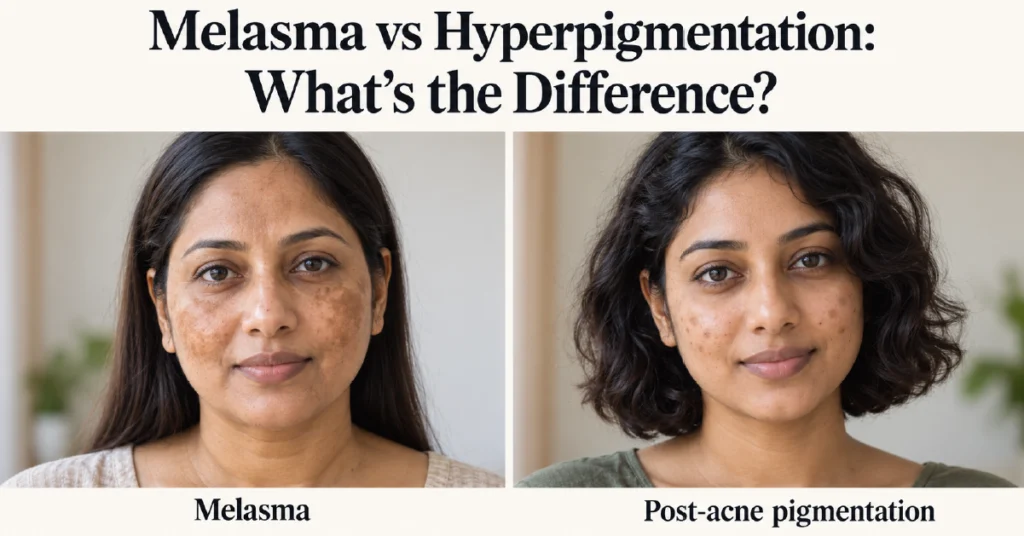
Understanding the difference between melasma vs hyperpigmentation will help you distinguish between the causes of the problem and identify treatment options. While hyperpigmentation refers to dark areas of the skin, melasma is a specific disorder characterized by symmetrical brown or grey-brown patches on the skin, especially on the face.
Different causes of skin discoloration may require different approaches. Learn more about the available pigmentation treatments and how they are selected according to individual skin concerns.
What Is Hyperpigmentation?
Hyperpigmentation refers to darkened patches of skin. This condition arises from excessive production of melanin, the pigment responsible for skin coloration. The extra pigment can manifest as small spots, large areas, or uneven skin color.
Hyperpigmentation may occur on various body parts, including the face, neck, hands, shoulders, and back. Its manifestation and intensity depend on the causes and the type of skin.
Causes of Hyperpigmentation
There are multiple causes of hyperpigmentation. Determining the cause is crucial, as various forms of hyperpigmentation require different treatments.
- Sunlight: UV rays stimulate melanin production in the skin, which can lead to dark spots and discoloration. Frequent exposure to the sun, without any form of skin protection, will only accentuate pigmentation.
- Post-inflammatory hyperpigmentation: Discoloration may occur following acne, eczema, insect bites, burns, and other skin irritation. Marks are especially prevalent among those with dark skin, as the spots persist long after the inflammation fades.
- Hormonal changes: Hormonal shifts may affect pigmentation production and lead to various problems, such as melasma. Pregnancy and hormonal therapy can also affect pigmentation formation.
- Skin irritation and certain medications: Irritating skincare products and medications can cause discolored skin. Consult a dermatologist to find out the cause.
Dark spots that develop after acne may remain visible even after the breakouts have healed. Read more about acne scars and pigmentation and the treatment options available for Indian skin.
What is Melasma?
Melasma is a chronic pigmentation disorder characterized by brown, grey-brown, and darker patches on the skin. Typically, melasma is seen on the cheeks, forehead, upper lip, and bridge of the nose. The patches usually occur symmetrically on the two sides of the face.
The appearance of melasma is associated with various factors, including sun exposure, hormonal changes, and genetic predisposition. Melasma occurs in people of all ages and is more common among women and individuals with fair to dark skin.
Unlike other types of discoloration, melasma tends to last for a long period and can recur despite improvements. Sun exposure and visible light tend to worsen melasma.
Since melasma can persist or return, professional assessment is important for selecting appropriate care. Explore melasma treatment options based on skin type, pigmentation severity and possible triggers.
Common Causes of Melasma
Melasma could result from multiple causes rather than a single cause.
- Hormones: Pregnancy and hormonal treatments have been known to cause melasma in people who are susceptible to the disease. For this reason, melasma is referred to as the “mask of pregnancy.”
- Light: UV rays and light have been found to stimulate pigment, thereby increasing the size of the patches. Sun protection is key to prevention of the disease.
- Genes: Inheritance of the disease has been associated with cases of melasma in patients. Genes dictate how susceptible a patient is to certain hormones and environmental conditions.
- Heat: Heat can cause melasma in people who are susceptible to the disease. However, its effects vary greatly.
Melasma vs Hyperpigmentation: Key Differences
| Feature | Melasma | Hyperpigmentation |
|---|---|---|
| Meaning | A specific pigmentation disorder | A broad term for skin darkening |
| Appearance | Larger, often symmetrical patches | Spots or patches of different sizes |
| Common Areas | Cheeks, forehead and upper lip | Face, neck, hands and body |
| Main Triggers | Sunlight, visible light, hormones and genetics | Sun exposure, inflammation, medications and other causes |
| Recurrence | Frequently recurring | Depends on the underlying cause |
| Treatment | Targeted pigmentation management and ongoing protection | Treatment depends on the type and cause |
Common Treatments
Various treatments may be used to address uneven skin and excess pigmentation.
- Regular sun protection: Sunscreen with SPF 30 or higher helps protect against pigmentation caused by UV rays. Reapplication, protective clothing, and shade might facilitate the treatment process, especially for melasma.
- Skincare ingredients: Ingredients like azelaic acid, Vitamin C, and retinoids might have a positive effect on some types of pigmentation. Their effectiveness might vary depending on skin sensitivity, the type of condition, and pregnancy/lactation.
- Prescription medication: A dermatologist might prescribe medications such as hydroquinone or a combination cream. This treatment should be used in accordance with professional recommendations to avoid irritation and other side effects.
- Professional procedures: Appropriate chemical peels, laser therapy, and other procedures may be used in some cases. Nevertheless, some treatments might aggravate melasma or cause other types of pigmentation in people with dark skin.
Procedures such as laser toning treatment may be considered for selected pigmentation concerns. However, laser treatment is not suitable for every patient with melasma and requires careful dermatological assessment.
If you are considering an in-clinic procedure, understanding laser toning vs chemical peels can help you discuss the potential benefits, limitations and risks with your dermatologist.
How to Prevent Pigmentation From Resurfacing
Prevention plays a vital role in managing melasma and other types of hyperpigmentation. After the skin starts showing signs of improvement, taking precautions will help minimise the risk of developing dark patches.
Here are some tips you might want to try:
- Apply sunscreen: Always use a broad-spectrum SPF 30 or higher and apply it daily regardless of weather conditions. Reapply every 2 hours while out in the sun and after swimming or sweating.
- Maintain a gentle skincare regimen: Choose mild cleansing and hydrating products suited to your skin type. Scrubbing hard or using products that burn or irritate your skin should be avoided. A consistent skincare routine can support skin health and help reduce irritation. Follow these daily skincare and sun protection tips to care for your skin throughout the year.
- Treat the cause of hyperpigmentation: Properly manage any existing inflammation, such as acne, and seek medical advice for any hormone-related issues.
- Be patient with the results: Skin pigmentation usually takes time to improve, ranging from several weeks to even months, depending on the type of hyperpigmentation and its cause.
What Are the Times to See a Skin Specialist?
In the presence of any of the following, a visit to a skin specialist is recommended to have the issue diagnosed and evaluated. The professional can help determine whether your condition is melasma or another pigmentation disorder and recommend a treatment based on your specific skin.
You should see a skin specialist urgently for any new or altered dark spots, especially if they are irregular in shape, have varied color, develop quickly, or bleed. These should not necessarily be regarded as pigmentation disorders.
For a personal skin evaluation and advice on your condition, Kolors Healthcare should be an option to consider when dealing with pigmentation issues.
Conclusion
A better understanding of melasma and hyperpigmentation can shed more light on why treatment for various skin conditions may vary. Hyperpigmentation is a general term for a number of causes of skin darkening; on the other hand, melasma is a particular type of skin discoloration linked to hormonal factors, heredity, and sunlight.
In any case, both skin conditions may be successfully treated with proper care, sun protection, and even medical procedures. The effectiveness of the procedure, however, depends on the cause of the condition, which may not go away completely. Do not consider appearance only; get professional help.
FAQs
1. Is melasma identical to hyperpigmentation?
No, melasma is a particular form of hyperpigmentation which usually results in symmetrical dark patches on the face; hyperpigmentation is a more general term and encompasses melasma, sunspots and dark marks resulting from inflammation.
2. How am I to know whether or not I have melasma or hyperpigmentation?
Melasma typically shows up as fairly large brown or grey-brown patches on the cheeks, on the forehead or on the upper lip. Other types of hyperpigmentation may manifest as separate dark spots, such as those remaining after an acne outbreak. A dermatologist can assist in confirming the cause.
3. Is it possible for melasma to disappear permanently?
Treatment together with protection from the sun may cause melasma to improve, but it can come back again, especially if the sun is exposed to continuously or if there are hormonal triggers. Permanent skincare and maintenance might then be required.
4. What is the best treatment for melasma and hyperpigmentation?
The course of treatment will vary according to the condition, the type of skin and how severe it is. Dermatologists might suggest the use of sunscreen, topical medications or certain procedures. There isn’t a treatment that is suitable for every kind of pigmentation disorder.
5. Is it possible for sunscreen to stop melasma from worsening?
Sunscreen that is broad-spectrum and used every day with a rating of SPF 30 or higher may help in preventing the deterioration of pigmentation; in the case of melasma, tinted sunscreen containing iron oxides can also offer protection against visible light.
