
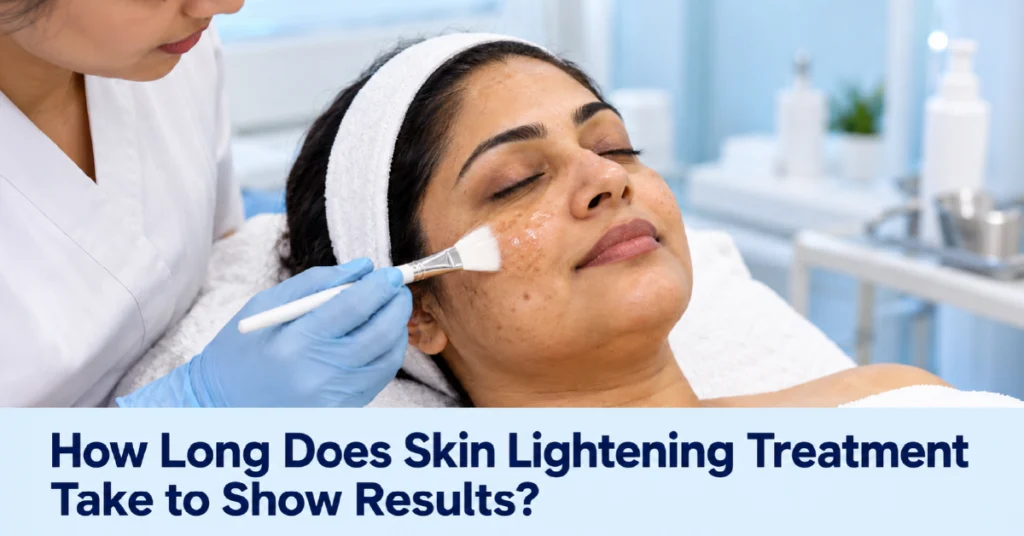
Uneven skin tone and pigmentation are common reasons people resort to skin lightening procedures. The procedures can help eliminate dark spots on the skin, reduce pigmentation, and even out skin tone. But the time required to see improvement depends on the procedure used, skin type, the cause of discolouration, and follow-up.
An understanding of the expected duration for seeing improvement from skin-lightening procedures helps people set realistic expectations and make appropriate skin care choices.
For example, some procedures may show effects within the first few weeks, while others may take a few months, depending on the procedure and the care involved. It should be noted that safe procedures emphasize reducing uneven skin pigmentation and not skin tone.
Skin brightening and skin lightening are often used interchangeably, but they can have different meanings. Understanding the difference between skin brightening and skin lightening can help you make informed decisions about treating pigmentation and achieving a more even-looking skin tone.
How Long Does It Take for Skin Lightening to Show Results?
The time required for results to appear will vary by individual patient. There are variations among topicals, chemical peels, and some lasers, hence the differences in time taken.
For mild pigmentation, improvement will begin to appear between four and eight weeks after the treatment begins. In cases where the pigmentation is deeper, such as Melasma, the results may appear after three to six months or longer. These are approximate times and results cannot be guaranteed.
The method chosen for skin lightening treatment results will depend on its cause and the patient’s skin.
Different pigmentation treatments work in different ways, and the time required to see improvement depends on the technique used. For certain pigmentation concerns, laser toning treatment may be considered following a professional skin assessment. Results vary depending on skin type, pigmentation severity and the number of sessions required.
Skin Lightening Treatment Factors Influencing Success
There are several factors that affect the timeframe in which the treatment will work on your skin. It is essential that you take those factors into account to create an efficient skincare regimen and not expect overnight results.
Factor 1 – The Condition and its Causes
To know how long the treatment will last, it is essential that you find out what is causing the condition. Mild post-inflammatory hyperpigmentation due to acne can slowly fade; however, melasma or deeper forms of pigmentation may take longer to resolve.
Pigmentation located near the surface of the skin responds faster to the correct treatment than deeper pigmentation. The correct diagnosis allows determining the right treatment and time frame.
Learning about acne scars and pigmentation can help you understand why different skin concerns need different treatment approaches
Factor 2 – Your Skin Type and Responsiveness
It is a known fact that each person reacts differently to skincare treatments or cosmetics. Some people have sensitive skin that irritates easily and causes post-inflammatory hyperpigmentation. In such cases, a gentler treatment is needed.
Consistency in Treatments
Failing to take your treatments as advised by the dermatologist can hamper your progress, as missing treatments, switching between products often, and using too many active ingredients without guidance can hinder it.
You should take your medications as per your doctor’s recommendation and also follow his/her advice to have follow-up visits. Consistency in treatment is important, but increased application will not make you see results any sooner and can cause irritation.
Sunlight and Aftercare
UV rays and visible light may worsen some types of skin pigmentations such as melasma. Even if your treatment is effective, a lack of sun protection can cause your dark spots to reappear.
Daily broad-spectrum sunscreen with at least SPF 30 is vital in treating skin pigmentation. You can also use additional sun protection measures, including reapplying sunscreen, wearing protective clothing, and seeking shade.
Skin Lightening Tips for Improving Your Treatment Outcomes
A good skincare regimen can aid treatment and reduce the risk of hyperpigmentation recurrence. Below are a few tips that can be helpful for most people with uneven skin tone.
- Apply sunscreen regularly: Select a broad-spectrum cream with SPF 30 or higher and apply as directed, especially when staying out for extended periods. Sunscreen prevents the worsening of existing dark spots and allows pigmentation treatment to be effective. Along with daily sun protection, following a suitable skincare routine can help maintain healthy skin and reduce the risk of pigmentation worsening. Read our guide on sunscreen and skincare routine for practical tips on protecting your skin from sun exposure.
- Have a mild skincare routine: Opt for a light cleanser and moisturizer that is suitable for your skin. Do not use aggressive exfoliants, scrubs, or a combination of actives at once, as irritation can cause additional discoloration.
- Follow the professional’s advice: Use prescribed creams and visit follow-up consultations on time. If you notice persistent burning, swelling, blister formation, or severe irritation, do not use the product or procedure anymore and consult a doctor.
- Be patient with slow improvement: Take pictures in the same lighting every several weeks and evaluate the outcome. Evaluating day-to-day changes can be misleading, whereas regular monitoring will allow you to see whether the treatment works.
What Are the Signs That You Need to See a Dermatologist?
Professional advice is critical when there is sudden or changing pigmentation, spreading pigmentation, or when it doesn’t go away even with adequate skincare. Pigmentation can occur for many reasons, but not all cases require skin whitening products.
The dermatologist will be able to evaluate the pigmentation problem you are experiencing, discuss your skincare regimen, and recommend treatments that will work for you. Such an evaluation is critical before undergoing chemical peels, laser therapies, or prescription medications.
Individuals with darker skin are more likely to develop new pigmentation due to irritation and certain cosmetic procedures. An appropriate choice of treatments and products can reduce this risk.
Discover Individualized Skincare Advice at Kolors Hair and Skin
At Kolors Hair and Skin, individuals have a platform to receive professional advice on skin care treatments. If you are looking for solutions for uneven pigmentation, seek professional advice from the experts at Kolors Healthcare on how best to achieve results, the duration of those results, and proper aftercare.
The cost of skin lightening treatments can vary depending on the procedure, number of sessions and individual skin concerns. If you are planning a treatment, understanding the skin whitening treatment cost in India can help you evaluate available options and plan your budget.
Always choose a treatment that suits your condition and is safe, and that does not make unrealistic promises about making your skin fairer instantly.
Conclusion:
The time it takes to see skin lightening treatment results depends on the cause of uneven pigmentation, the chosen treatment method, the nature of the skin, and aftercare. Some topical treatments might yield visible results in four to eight weeks, whereas other pigmentation treatments can take several months.
It is also important to practice daily sun protection, protect skin from harsh environments, and seek professional guidance to minimize the risk of developing discolouration. Do not go for a treatment that promises to make your skin lighter overnight; the right treatment will simply make your skin look healthier with even pigmentation.
