
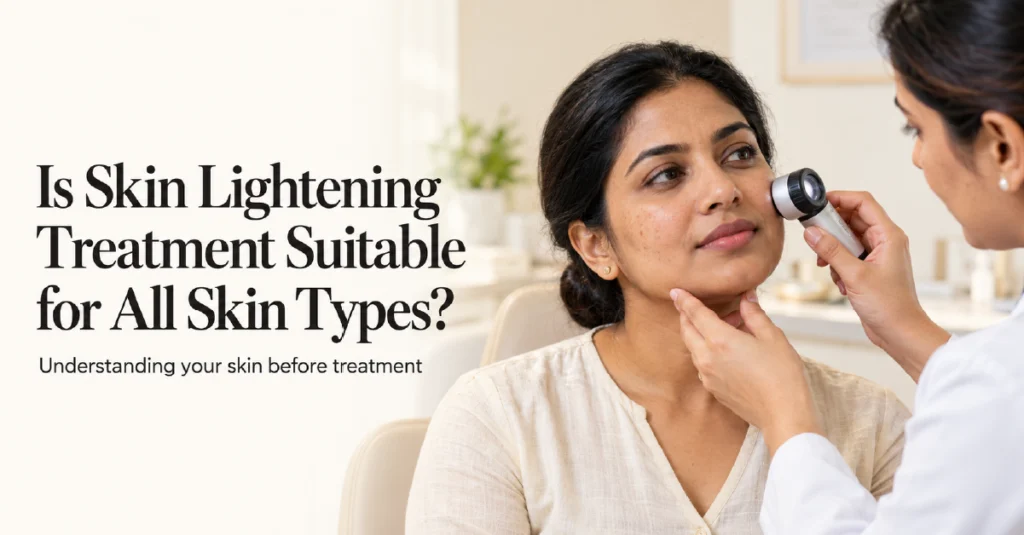
Skin bleaching procedures have become quite common among individuals interested in reducing pigmentation, fading dark spots, and evening out their skin tone. However, not all available procedures are equally effective and safe for everyone. Skin type, skin tone, sensitivity, skin conditions, and the cause of pigmentation can affect the effectiveness and safety of skin bleaching procedures.
It is important to know whether skin bleaching is safe for all skin types before using the procedure or product. While most of the individuals will be able to undergo such procedures, the choice of the appropriate procedure will depend on an individual’s skin type and needs. The dermatologist will examine the skin and choose the best products.
What is Skin Lightening Treatment?
Skin lightening treatment is a term for professional skin lightening procedures and products used to reduce excess pigmentation and even out skin tone. This procedure might help address issues such as melasma, sun spots, post-inflammatory hyperpigmentation, and acne-related dark spots.
Depending on the problem, one can choose from various treatments, including topical products, chemical peels, and certain types of lasers. The main idea here is to eliminate unnecessary pigmentation while maintaining skin health and not altering the skin’s natural color.
Different methods act on the skin in different ways. Hence, it is crucial to choose the right one.
Skin brightening and skin lightening are often used interchangeably, but they serve different purposes. Understanding skin brightening vs skin lightening can help individuals choose an approach that addresses their specific skin concerns.
Is Skin Lightening Treatment Right for All Skin Types?
It is possible that skin lightening treatment for all skin types is right. However, some procedures may be unsuitable for people. Active ingredients and procedures can affect oily, dry, sensitive, combination and hyperpigmented skin in different ways.
-
Oily Skin
People with oily skin produce too much sebum and may experience clogged pores, breakouts, and dark spots after acne. People with oily skin can benefit from various topical treatments that help address their concerns, such as azelaic acid and niacinamide.
Acne breakouts can also leave dark marks that take time to fade. Understanding the difference between acne scars and pigmentation can help individuals identify suitable treatments for their skin concerns.
Nevertheless, oily skin does not mean that it is resistant to irritation. Strong exfoliators and combinations of active ingredients can disrupt the skin barrier’s integrity and worsen the problem. A proper skin-lightening routine needs to address acne and dark spots without causing irritation.
-
Dry Skin
Dry skin has a weakened or irritated skin barrier. It means that choosing the right products can be crucial. Some ingredients and chemical peels can contribute to dryness, flakiness and irritation.
If a person has dry skin he/she should choose moisturising products in addition to skin-lightening ones.
-
Sensitive Skin
The skin may be sensitive to perfumes, highly acidic substances, retinoids, or other active compounds. In this case, a step-by-step treatment course is usually preferred over an aggressive one and using various products simultaneously.
A dermatologist may suggest simplifying the skincare regimen and determine whether patch testing is necessary. The signs of inflammation, such as redness, a burning sensation, and itching, should not be overlooked, as they may cause pigmentation.
-
Combination Skin
In the case of combination skin, some areas of the face will be oily, whereas others are dry, so there may be no universal approach. For example, the forehead and nose may need moisturizers different from those for the cheeks.
An individual skincare treatment regimen will help eliminate pigmentation without stripping moisture or drying out oily zones.
Other Factors to Consider Before Selecting a Treatment Method
The state of one’s skin is just one of the factors that determine whether a particular treatment option is appropriate. The cause of the pigmentation problem, the patient’s current skin condition, and the type of treatment being considered are other factors to consider.
Different pigmentation concerns may require different approaches. Professional pigmentation treatments can be considered after assessing the underlying cause, skin type and suitability of available procedures.
Here is what should be taken into account prior to treatment.
- Reason for pigmentation: One reason for hyperpigmented spots on the skin may be exposure to sunlight, hormonal issues, acne, inflammation, or medication use.
- State of the patient’s skin: Active eczema, dermatitis, rosacea, or inflammatory acne requires treatment before certain cosmetic procedures can be performed. It is necessary to avoid worsening skin irritation when applying products to the skin.
- Patient’s previous experience: Any allergies, skin sensitivity, and reactions to skin injuries should be mentioned while consulting a dermatologist.
- Sunlight exposure and lifestyle: UV radiation tends to aggravate skin conditions and reduce the effectiveness of treatment. Sunscreen and clothing protection are necessary measures for the effective management of skin problems.
How Long Will It Take to See the Effects of Skin Lightening Treatment?
The time to see results depends on the type of pigmentation and the treatment used. It takes some treatments weeks before results are noticed. In other cases, persistent pigmentation may take several months of proper management.
Procedures such as laser toning and chemical peels may require multiple sessions depending on the type and severity of pigmentation. Treatment suitability, recovery time and possible side effects should be discussed with a qualified dermatologist.
Patience is advised since aggressive treatments do not always work best. Proper care and guidance, as well as protection from the sun, should help in obtaining the results.
Seeking Professional Advice at Kolors Healthcare
Professional skincare and cosmetic treatment advice can be obtained from Kolors Hair and Skin if you want to address your skin problems. Before starting anything else, speak with the clinic’s professional practitioner about your pigmentation concerns, your skin type, suitability for the treatment, potential results, and the risks of using this solution.
Conclusion
There is no universal remedy for skin lightening, although it can be an effective solution for many people when used properly. It is necessary to consider the features of oily, dry, sensitive, combination, and melanin-enriched skin types separately.
Therefore, the safest approach to addressing dark spots involves treating the underlying causes, protecting the skin barrier and following a suitable sunscreen and skincare routine to help minimise sun-related pigmentation.
